
July 15, 2026 · 7 min read · Krono Legacy
How to Spot a Fake Rolex: A Dealer's Authentication Checklist
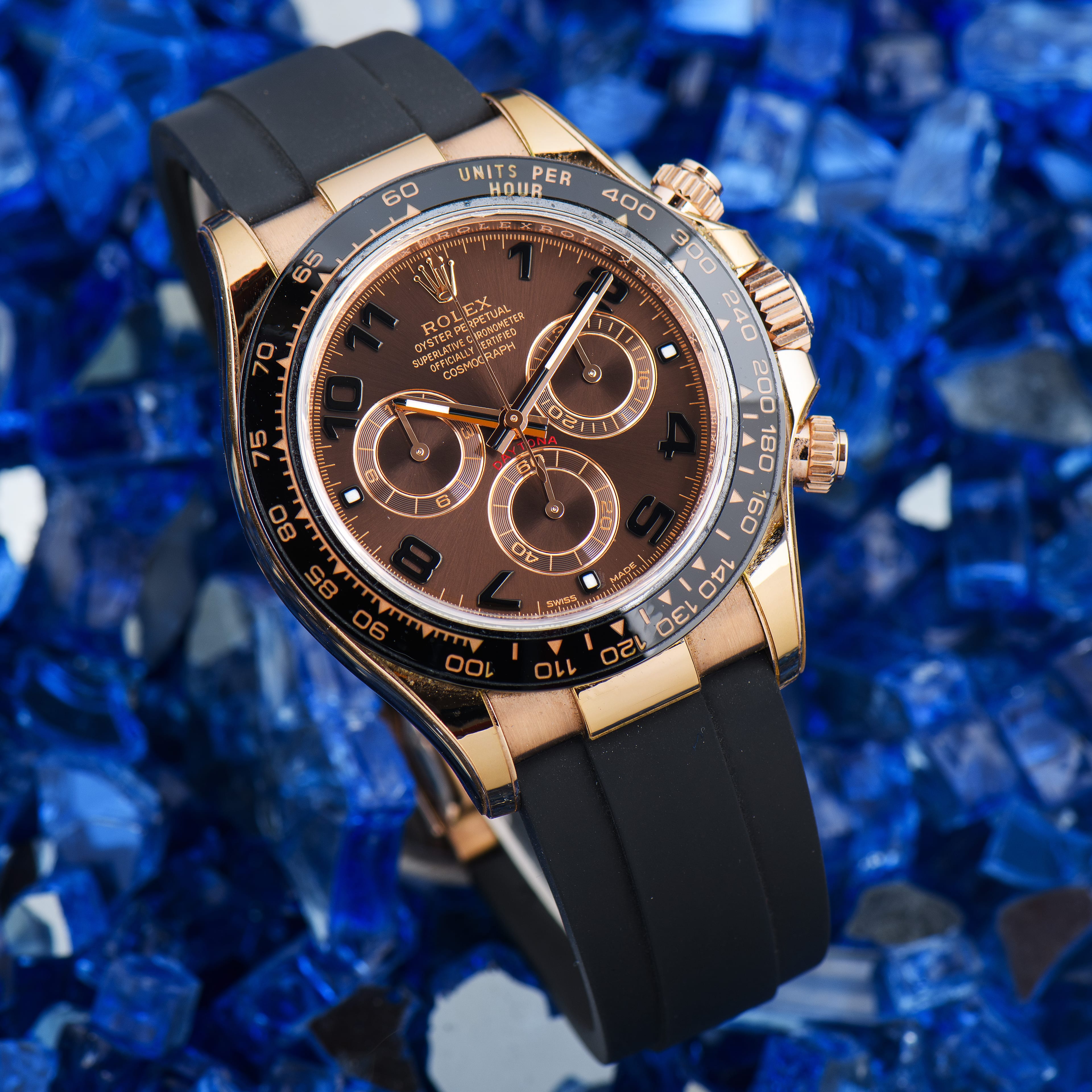
The fastest way to spot a fake Rolex is to check five things counterfeiters still get wrong: the magnification of the date, the engraving on the inner rim, the crispness of the serial number, the sweep of the seconds hand, and the tiny crown laser-etched into the crystal. Any one of them can give a fake away in seconds. Below is the exact sequence we run at the desk before a watch changes hands.
It's worth doing. Counterfeit watches are a multi-billion-dollar trade: the OECD estimates that fake watches infringing Swiss brands were worth around USD 1.88 billion in 2021, and watches are consistently among the highest-value goods seized at the U.S. border — including a single shipment worth over $54 million intercepted by CBP. The good news: the fundamentals of authentication haven't changed, and you don't need a workshop to catch most fakes.
1. Start with the cyclops and the date
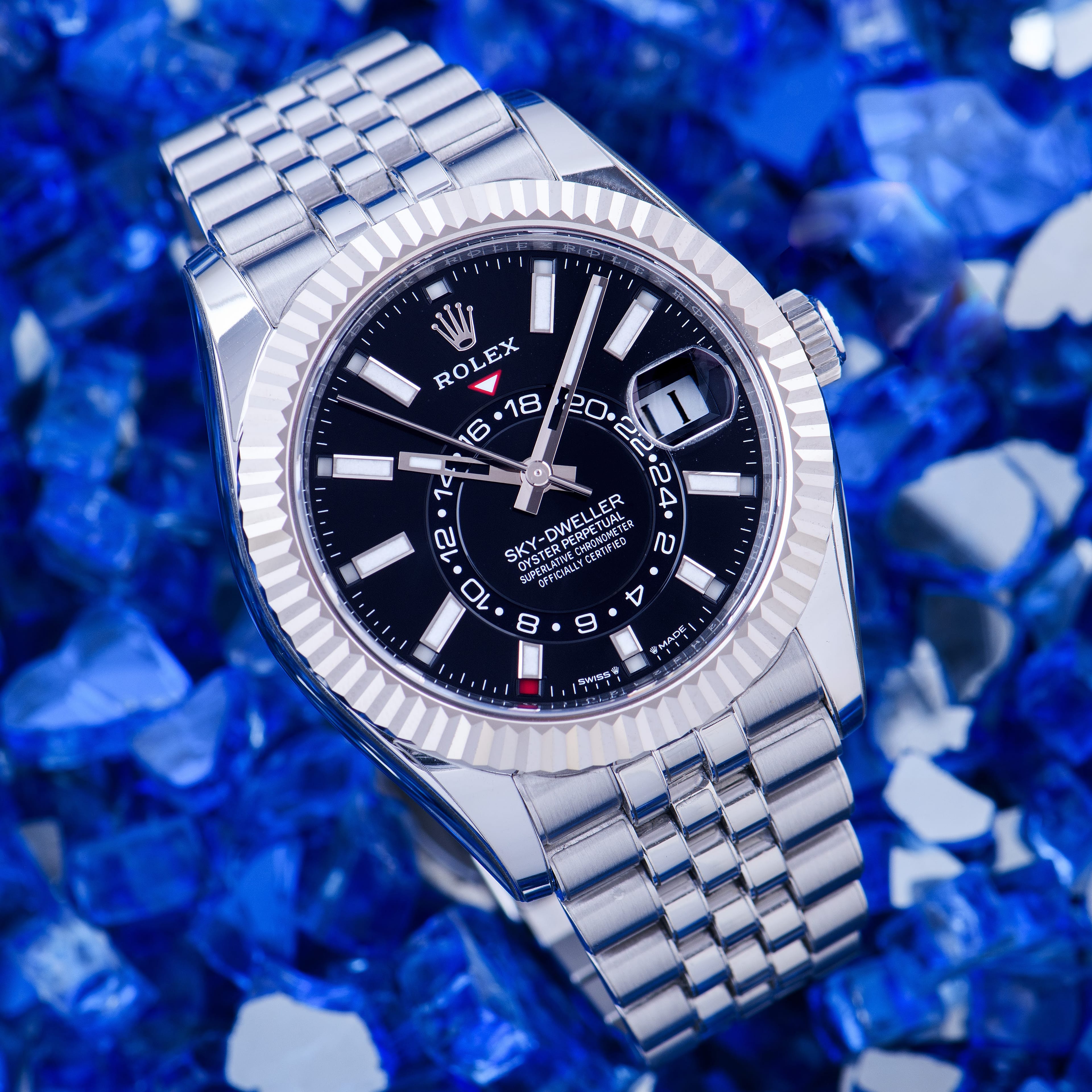
The cyclops is the small bubble of magnification over the date window. On a genuine Rolex it magnifies the date roughly 2.5×, so the number looks large, crisp, and centered — it essentially fills the window. Most fakes get the magnification wrong: the date looks small (often closer to 1.5×), sits off-center, or reads slightly blurry. Look at it straight-on, then tilt it. A real cyclops snaps the date into sharp focus; a weak one never quite does.
2. Read the rehaut engraving
The rehaut is the inner ring between the dial and the crystal. Since the mid-2000s, Rolex has engraved "ROLEX ROLEX ROLEX" around it, with the serial number engraved at the 6 o'clock position. On a genuine watch the engraving is clean and evenly cut, and the wording is precisely aligned to the markers. Counterfeit rehauts are one of the hardest details to copy: the text often looks shallow, slightly fuzzy, unevenly spaced, or misaligned with the hour markers. This is one of the most reliable single tells.
3. Inspect the serial and reference engraving
Genuine Rolex serial and reference engravings are laser-cut with remarkable precision — the edges are sharp and catch the light almost like a cut gemstone. Fakes are frequently etched with cruder methods, so the characters look grainy, sandy, or slightly raised rather than crisply incised. If you can see where the numbers are (on modern watches the serial is on the rehaut; on older ones it's between the lugs), a loupe makes the difference obvious. While you're there, confirm the reference number matches the watch. If you're not sure how to read one, our primer on decoding watch reference numbers walks through what the digits mean.
4. Watch the movement
The seconds hand is a giveaway you can check without opening anything. A genuine Rolex mechanical movement beats at a high frequency, so the seconds hand appears to glide in an almost continuous sweep. Many fakes use cheaper movements that tick once per second in a single, visible jump — or try to imitate the sweep but do it in a stuttering, uneven way. Hold the watch to your ear, too: a loud, hollow tick is a warning sign.
5. Find the microscopic crown
Since around 2002, Rolex has laser-etched a tiny crown logo into the crystal at the 6 o'clock position. It's deliberately hard to see — nearly invisible to the naked eye, and usually only visible under angled light or a loupe. A crown that is obvious, chunky, or sits in the wrong place is a red flag, and a missing crown on a modern reference is another. Counterfeiters know about this feature now, so it's not proof on its own — but combined with the checks above, it's a strong signal.
Weight, bracelet, and overall feel
Genuine Rolex watches are made from dense, high-grade materials — most modern steel models use 904L (Rolex calls it Oystersteel). They feel substantial and solid in the hand, and the bracelet has tight tolerances with no rattle or sharp edges. Fakes often feel noticeably light or hollow, and the bracelet may have loose links, uneven brushing, or a clasp that closes with a cheap snap. None of this is conclusive alone, but a watch that feels wrong usually is.
What actually protects you: provenance and where you buy
Physical tells matter, but the single biggest protection is buying from a source that authenticates every watch and stands behind it. A full set — original box, warranty card, and booklets — supports both authenticity and resale value, though plenty of genuine watches trade without one. What matters most is that the watch itself is verified correct. Rolex now runs its own Certified Pre-Owned programme, which fully authenticates second-hand watches through the brand — a sign of how seriously provenance is taken at every level of the market.
For a broader walkthrough of buying safely on the secondary market — authentication, condition, and fair pricing — see our guide on how to buy a pre-owned luxury watch with confidence. And if you're shopping for a specific reference, every piece in our Rolex collection is authenticated in-house and transparently priced.
When in doubt, get a second opinion
Modern counterfeits — the so-called "super fakes" — can pass a quick glance, so if a watch is expensive or something feels off, don't rely on a single test. Run all five checks, weigh the watch, examine the bracelet, and if any doubt remains, have it authenticated by a specialist or watchmaker before money changes hands. A genuine seller will never object to that.
At Krono Legacy, every watch is authenticated in-house before it's listed, and we're always happy to walk you through exactly what we're looking at. Have a Rolex you're unsure about? Get in touch and we'll help you make sense of it.
Keep reading